

Categories
Buying, Relocating to the Ozarks, 417 Real Estate MarketPublished October 12, 2026
First-Time Homebuyer Guide to the 417 Area: What You Need to Know Before You Buy



Buying your first home is a major financial decision, and knowing where to begin can make the process easier to navigate.
If you are considering purchasing a home in the 417 area of Southwest Missouri, understanding the steps involved can help you prepare, establish a budget, and make informed decisions along the way.
The 417 area includes Springfield and surrounding communities such as Nixa, Ozark, Republic, Battlefield, Rogersville, and Willard. Each location offers different housing options, property characteristics, access to services, and transportation considerations. Taking time to research these factors can help you identify homes that align with your budget and preferences.
Whether you are already living in Southwest Missouri or planning a move from another state, this guide walks you through the first-time homebuying process, from financial preparation to closing day.

Step 1: Determine How Much Home You Can Afford
Before browsing listings, take a close look at your finances. The amount a lender is willing to approve is not necessarily the amount you will want to spend each month.
Start by reviewing your income, existing debts, savings, and regular expenses. Consider how a mortgage payment would fit into your overall budget while leaving room for other financial priorities.
When estimating the cost of homeownership, account for more than the purchase price.
Expenses to include in your budget:
- Mortgage payment: Principal and interest, based on your loan amount, interest rate, and loan term.
- Property taxes: Annual taxes that can vary by property and taxing jurisdiction.
- Homeowners insurance: Premiums based on the property, coverage, and insurer.
- Mortgage insurance: May be required depending on your loan program and down payment.
- Utilities: Electricity, natural gas, water, sewer, trash collection, and internet, as applicable.
- Maintenance and repairs: Ongoing upkeep and unexpected expenses.
- Homeowners association fees: Applicable to some properties and communities.
- Other property expenses: Lawn care, pest control, appliances, or other services you may need.
It is also wise to keep emergency savings available after purchasing a home. An unexpected repair or change in expenses can put pressure on a budget that is already stretched.
For a closer look at local expenses, read our guide to Why So Many People Are Moving to the 417 Area and What It Really Costs to Live Here
Step 2: Get Preapproved for a Mortgage
Mortgage preapproval is an important early step because it gives you an estimate of how much a lender may be willing to lend based on the financial information reviewed.
A lender may evaluate your income, employment, credit history, debts, assets, and other information. You may be asked to provide documents such as pay stubs, tax returns, bank statements, and identification.
Preapproval can help you establish a realistic search range, but it does not guarantee final loan approval. The lender will still need to complete its underwriting process and evaluate the property and other loan requirements.
When comparing lenders, ask about:
- Interest rates and whether they are fixed or adjustable.
- Loan terms and estimated monthly payments.
- Closing costs and lender fees.
- Down payment requirements.
- Credit and income requirements.
- Rate-lock options and expiration dates.
- Whether mortgage insurance will apply.
- Available loan programs and assistance options.
It can be helpful to compare estimates from more than one lender before making a decision. Review the total cost of the loan, not just the advertised interest rate or monthly payment.
Step 3: Understanding Down Payments and Closing Costs
One common misconception about buying a home is that every buyer must save a 20% down payment. In reality, down payment requirements vary by loan program, lender, borrower qualifications, and other factors.
Some conventional mortgage programs allow lower down payments for eligible borrowers. FHA, VA, and USDA loans also have their own eligibility criteria and requirements. Certain programs may offer down payment or closing cost assistance to qualified buyers.
Ask a lender to explain which options may be available based on your circumstances. Assistance programs can have income limits, purchase price limits, property requirements, location restrictions, or other conditions.
What are closing costs?
Closing costs are expenses associated with completing a real estate transaction. They are separate from your down payment and may include:
- Loan origination and lender fees.
- Appraisal and credit report fees.
- Title services and title insurance.
- Recording fees and other government charges.
- Prepaid property taxes and homeowners insurance.
- Initial escrow deposits, when applicable.
- Other costs outlined in your transaction documents.
The amount varies by transaction, property, loan, and service providers. Your lender's Loan Estimate and later Closing Disclosure help explain the costs associated with your mortgage.
Before making an offer, understand how much money you may need at closing and what funds you will have left afterward.

Step 4: Start Your 417 Home Search
Once you have a working budget and understand your financing options, you can begin comparing available homes.
The 417 area includes a range of property types and price points. Depending on current inventory, buyers may encounter existing homes, new construction, townhomes, condominiums, and properties with different lot sizes, layouts, and features.
Start by identifying the factors that matter most to you. These may include:
- Purchase price and estimated monthly costs.
- Number of bedrooms and bathrooms.
- Square footage and floor plan.
- Lot size and outdoor maintenance requirements.
- Age and condition of the property.
- Garage, parking, and storage options.
- Heating, cooling, windows, and other major systems.
- Distance to work, services, shopping, or recreation.
- Access to major roads and transportation routes.
- Property taxes, insurance costs, and any applicable association fees.
Consider which features are essential and which are preferences you could adjust. You may find that comparing several properties helps clarify how your budget relates to the features available in the current market.
Which 417 Community Should You Consider?
Springfield and nearby communities have different locations, housing inventories, public services, transportation connections, and amenities. Researching these details can help you compare properties based on your own priorities.
Our guide, The Complete Guide to Choosing the Right Community in the 417 Area, provides a starting point for researching communities throughout Southwest Missouri.
You can also begin browsing available properties through The Torp Team's home search. Listing availability and prices change, so check the current details before scheduling a showing.
Step 5: Work With a Real Estate Agent and Make an Offer
A real estate agent can help you understand the transaction process, arrange property showings, prepare and submit an offer, and navigate contract deadlines.
Before beginning the process, discuss how the agent works with buyers, what services are provided, and the terms of any representation agreement. Review any agreement carefully and ask questions about compensation and obligations before signing.
When you find a property you want to pursue, your offer may address several important details, including:
- The proposed purchase price.
- Earnest money and how it will be handled.
- The proposed closing date.
- Financing terms.
- Inspection provisions and applicable deadlines.
- Appraisal provisions, if included.
- Other contingencies or terms negotiated by the parties.
Earnest money is generally a deposit made after an offer is accepted, according to the terms of the contract. How it is held, credited, or returned depends on the contract and the circumstances of the transaction.
A lower offer price is not the only factor to consider when evaluating an offer. Financing, contingencies, timing, and other terms can also affect the transaction.
Before signing, make sure you understand the contract, including deadlines and the consequences of failing to meet them. Ask your real estate agent or a qualified attorney to explain provisions you do not understand.

Step 6: Schedule Inspections and Complete the Appraisal
After an offer is accepted, several steps may take place while the lender processes your mortgage application and the parties work toward closing.
Home inspection
A home inspection provides information about the property's condition at the time of the inspection. Depending on the inspector's findings and the scope of the inspection, you may learn more about the roof, foundation, plumbing, electrical systems, heating and cooling equipment, and other components.
An inspection is not a guarantee that every issue will be identified. Additional evaluations may be appropriate if the inspector identifies a concern.
Review the inspection report carefully and discuss significant findings with your agent. Depending on the contract, you may have options to request repairs, negotiate terms, proceed as agreed, or take other permitted actions.
Home appraisal
If you are financing the purchase, your lender will generally arrange an appraisal to help assess the property's market value for lending purposes.
The appraisal is different from a home inspection. An inspection focuses on condition, while an appraisal estimates value. If the appraised value differs from the contract price, your available options depend on the loan, contract terms, and negotiations between the parties.
Final loan approval
Your lender will continue verifying financial information and reviewing the loan file. Respond promptly to requests for documents, and avoid making major financial changes, such as taking on new debt or changing jobs, without discussing the potential impact with your lender.
Keep track of inspection, financing, appraisal, and other contractual deadlines throughout this stage.

Step 7: Prepare for Closing Day
As the transaction approaches closing, your lender and closing provider will explain the remaining steps and documents.
You will generally receive a Closing Disclosure for a mortgage loan covered by the applicable disclosure requirements. Review it carefully and compare the final costs with the Loan Estimate you received earlier. Ask questions about any figures or terms you do not understand.
Before closing, you may also need to:
- Arrange homeowners insurance.
- Confirm how much money is due at closing and the approved payment method.
- Complete a final walkthrough, as appropriate.
- Review instructions for signing documents.
- Confirm the closing date, time, and location.
- Verify any wiring instructions independently using a trusted phone number, since real estate transactions can be targets for payment fraud.
At closing, you will sign the required documents and complete the financial arrangements for the purchase. Once the transaction is completed and the applicable requirements are satisfied, you can receive the keys according to the agreed terms.
Common First-Time Homebuyer Mistakes to Avoid
A little preparation can help you avoid preventable problems during the homebuying process.
1. Shopping before reviewing your budget. Start with a realistic monthly payment range that accounts for taxes, insurance, and other ownership costs.
2. Assuming a preapproval guarantees a loan. Preapproval is an early assessment, not final approval. Keep your lender informed and provide requested documents promptly.
3. Overlooking closing costs. Set aside funds for transaction expenses in addition to your down payment.
4. Skipping due diligence. Understand the inspection provisions in your contract and consider appropriate professional evaluations.
5. Focusing only on the asking price. Compare the property's condition, expected maintenance, taxes, insurance, and other expenses.
6. Missing contract deadlines. Keep a written record of important dates and ask your agent or lender to clarify any deadlines you do not understand.
7. Making major financial changes during the mortgage process. New debt, large purchases, or changes in income can affect loan approval. Consult your lender before making significant changes.
8. Rushing a decision. Take time to review the information available, compare your options, and ask questions before committing.
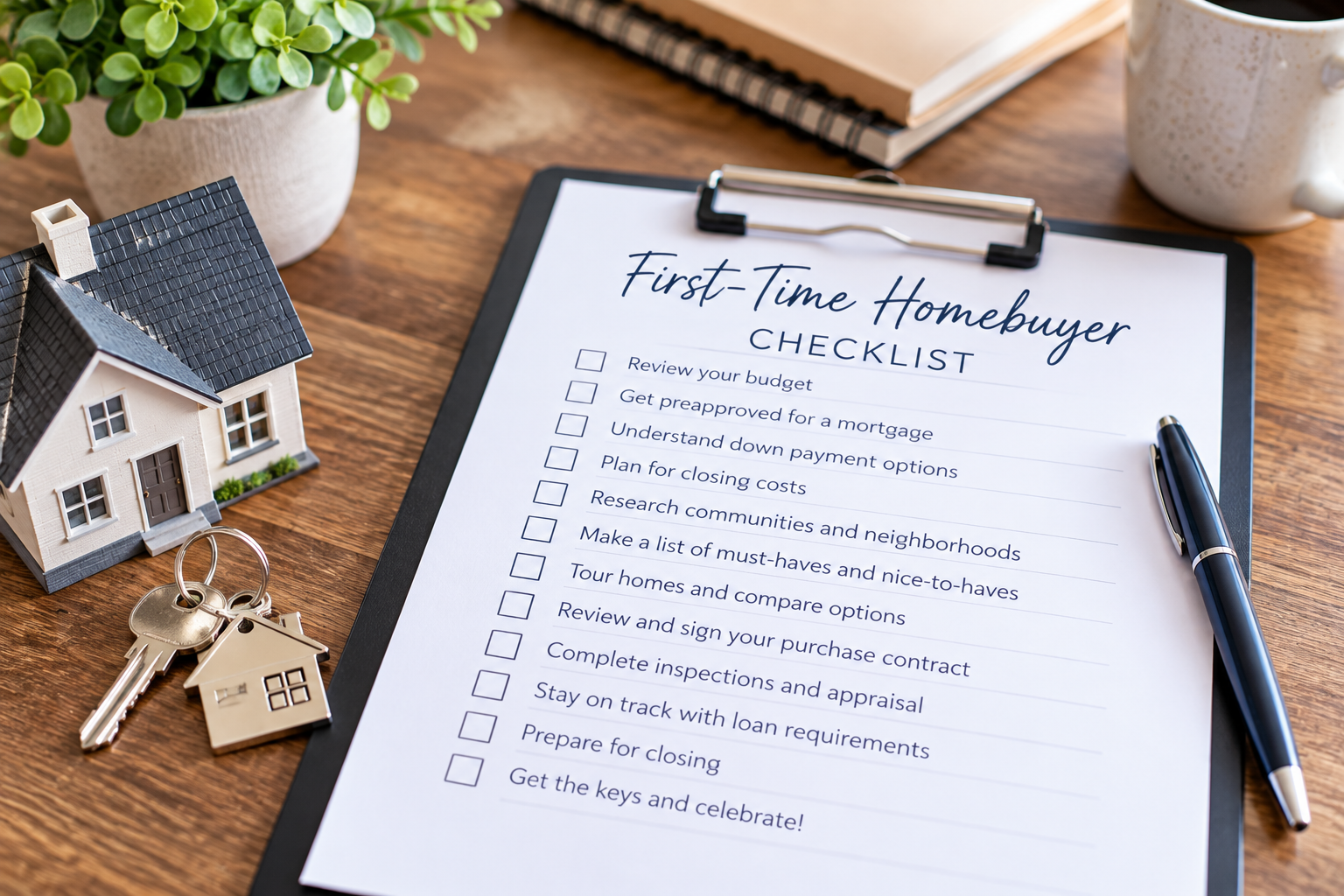
First-Time Homebuyer Checklist
Use this checklist to organize your next steps.
- Review your income, expenses, debts, and savings.
- Estimate a comfortable monthly housing budget.
- Compare mortgage lenders and request preapproval.
- Ask about down payment options and assistance programs.
- Set aside funds for closing costs and future maintenance.
- Identify property features and locations to compare.
- Research current listings and schedule showings.
- Review the terms of your buyer representation agreement.
- Read and understand your purchase contract.
- Complete inspections and review the appraisal process.
- Respond to lender requests and track deadlines.
- Review closing documents and verify payment instructions.
- Complete the final walkthrough and closing process.
Buying Your First Home in the 417 Area
Purchasing your first home involves several decisions, but understanding the process can help you approach each step with more confidence. Establishing a budget, comparing financing options, researching properties, and understanding your contract can help you make informed decisions throughout the transaction.
If you are still determining what your budget may buy, read What Can You Buy for Your Budget in the 417 Area? A Homebuyer's Guide.
Planning to relocate from another state? Our guide to Buying a Home in the 417 Area From Out of State: What to Know Before You Move covers additional considerations for researching and purchasing a home remotely.
When you are ready to explore available properties, visit The Torp Team's website to begin your search or contact the team with questions about the homebuying process in Southwest Missouri.

Connect With The Torp Team:
🌐 Website: https://thetorpteam.com
📘 Facebook: https://www.facebook.com/p/The-Torp-Team-Realtor-100057079194774/
📸 Instagram: https://instagram.com/springfieldmorealestate
🎥 YouTube: https://youtube.com/@TheTorpTeamRealtors
🎵 TikTok: https://www.tiktok.com/@springfieldmorealtor
🏡 Down Payment Tips: https://stan.store/OzarksDPApro
Questions about relocating to the 417? Contact The Torp Team for a free relocation guide and personalized neighborhood recommendations.
This article is for general educational purposes and is not legal, tax, mortgage, or financial advice. Loan requirements, assistance programs, contract terms, and property costs vary. Consult the appropriate qualified professionals for guidance specific to your circumstances.

Chuck & Cassie
| The Torp Team | AMAX Real Estate
or another way